

The barrier is the environment, not the person: an SMA patient and professional care sharing session
AI-translated from the Chinese original · editorially reviewed
[iHelp Charitable Trust event series]
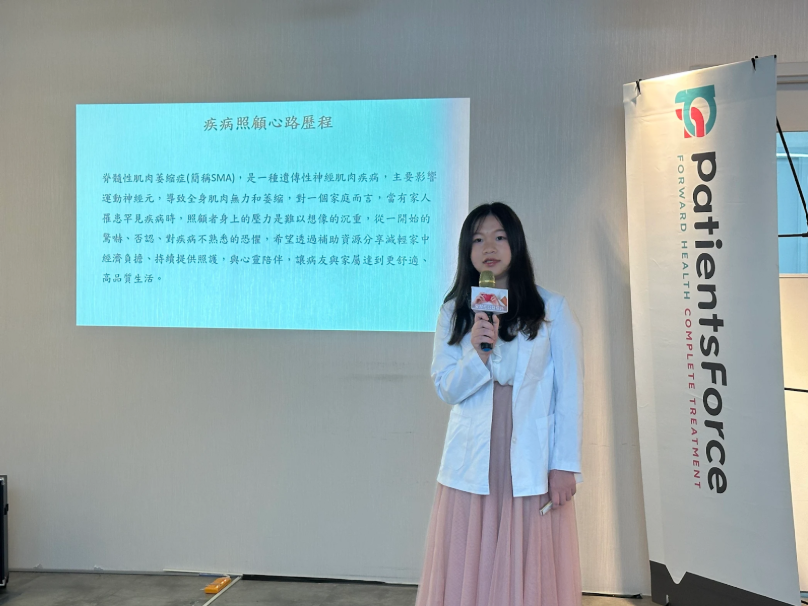
The iHelp Charitable Trust held its "Composing the Chapters of Life" SMA patient and care sharing session on August 22. The event invited SMA patient Chloe (a pseudonym) and a clinical patient educator to share their real-life stories and professional experience, guiding colleagues into the everyday world of SMA patients and their families and helping them understand the journey of living with the disease and its care.
Chloe's story: a life journey of bravely stepping out into the world
Chloe was diagnosed with spinal muscular atrophy (SMA) in early childhood. As early as kindergarten she faced the limitations of inaccessible environments and countless challenges. She began drug treatment in 2023, and with the support of family and friends she has continued to face life with a positive attitude, gradually setting out on the journey of her dreams. Traveling abroad, however, was a major challenge. She researched everything she could find and spent six months talking it through with her family — from easing their worries to finally winning their support — before taking on the challenge of independent travel in her powered wheelchair. Riding her powered wheelchair, she visited the UK, France, Switzerland, Italy, the Netherlands, Denmark and Iceland. Along the way she experienced how widely Europe has embraced universal design in its cities — environments that accommodate different needs while blending with the local culture to create diverse, welcoming spaces. In Paris, she experienced a freedom she had never felt before.
A professional care perspective: caring with love, companionship as the deepest support
SMA is a rare hereditary neuromuscular disease. The PSP patient educator noted that when a family member has SMA, caregivers often carry long-term psychological and financial burdens. Patient assistance resources can help ease that load, allowing both patients and caregivers to find physical and emotional balance.
The PSP patient educator also shared real examples of navigation — referring patients to social resources — and of helping patient families integrate support, including:
- Long-term care services: in-home rehabilitation, transportation services, respite care, home environment modifications
- Assistive device subsidies for people with disabilities: powered wheelchairs, respiratory equipment and more
- In-home dental services: basic dental care such as cleanings and fillings, easing the burden on those with limited mobility
- Electricity subsidies: helping families that rely on medical equipment reduce the pressure of power bills
Through these public programs and market resources, patients and families can gain greater financial, family and psychological support. By mapping resources to each patient's situation and integrating them with daily-life needs, PSP patient educators can genuinely improve the lives of caregivers and patients. Only when body and mind are in balance can patients fully engage with their treatment and, in turn, improve their overall wellbeing.
Listening with heart, acting with persistence
The session offered more than SMA knowledge and resources — it moved hearts, prompting colleagues to reflect on how to practice greater understanding and support in daily life. When trying to understand a patient's needs, we should not decide for them based on our own assumptions, but listen sincerely: ask "What do you need?" rather than "What I think you need." Patients deserve respect as independent individuals, not merely as patients or people to be cared for.
Since its founding in 2017, the iHelp Charitable Trust has continued to help patients with cancer, rare diseases and major illnesses through their most difficult times. We believe every act of listening and sharing is an important stroke in composing the chapters of a life!