

"My Ordinary Everyday, Someone Else's Poetry and Distant Horizons": a rare-disease patient group faces the public with an art exhibition for the first time
AI-translated from the Chinese original · editorially reviewed
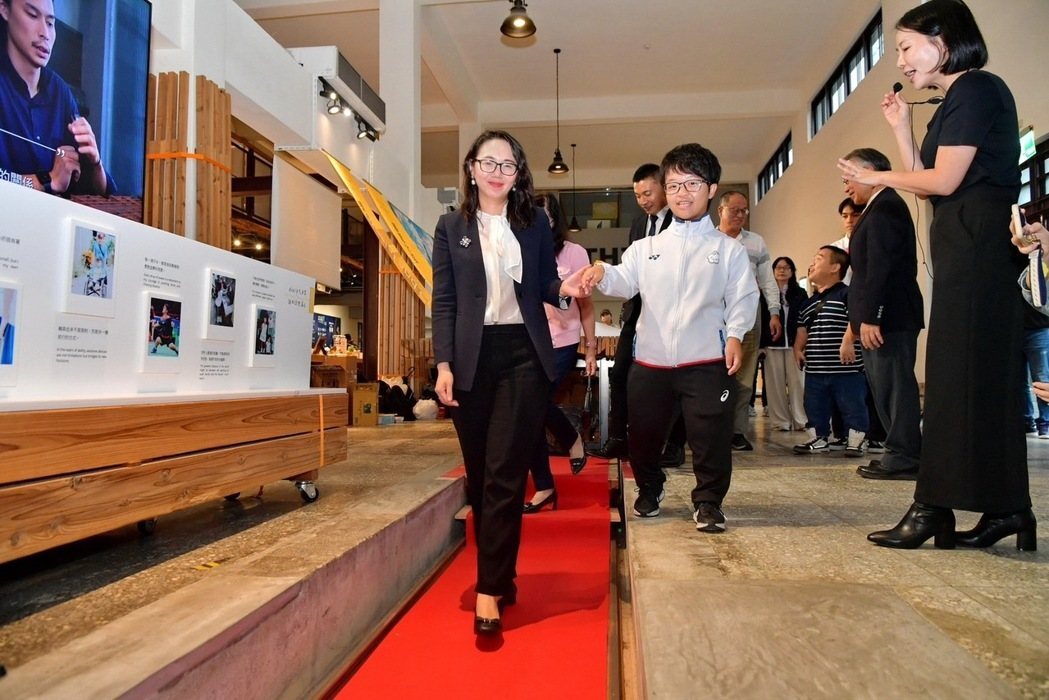
The exhibition exploring rare disease, "My Ordinary Everyday, Someone Else's Poetry and Distant Horizons: Drop 30 Centimeters and Step into Life with the Rare Disease 'Achondroplasia,'" opens today (Nov 12) and runs through Nov 17 as a free public-interest exhibition at the Nangang Bottle Cap Factory. Across seven zones—interactive experiences, installation art, documentary photography, documents and records, imagery, assistive living aids, and action support—it vividly and three-dimensionally presents the life circumstances of people living with achondroplasia, in hopes of deepening the public's understanding of and support for the rare-disease community. The exhibition also offers public guided tours daily at 3 p.m., and invites the public and school groups to sign up.
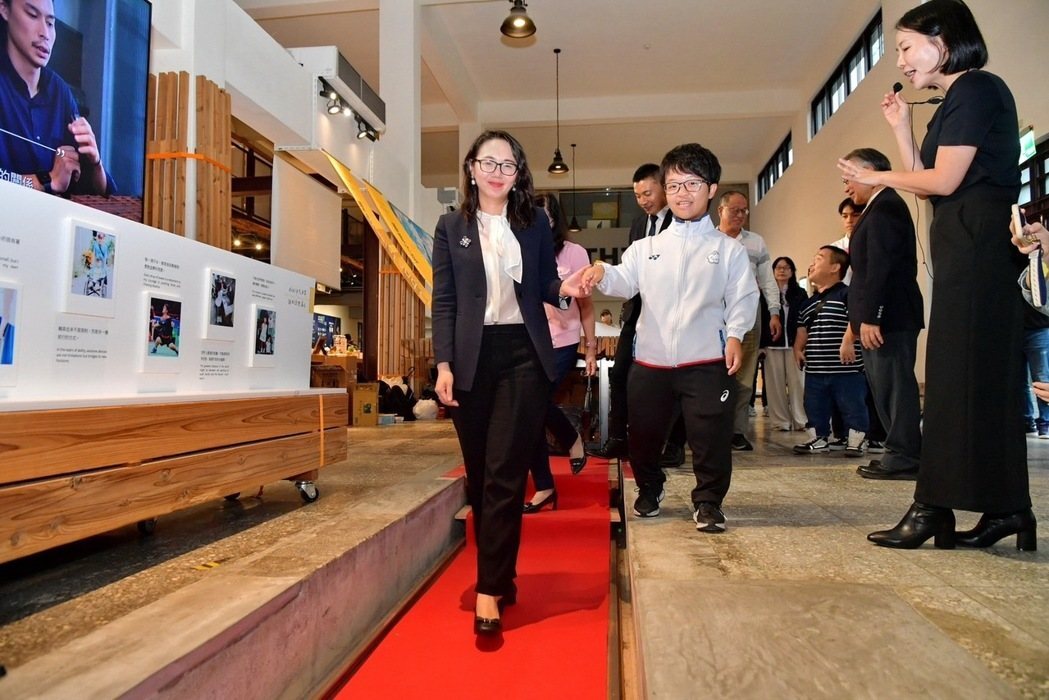
National Health Insurance Administration Deputy Director-General Chen Liang-yu experiences dropping 30 centimeters to step into life with the rare disease "achondroplasia." Provided by the organizer.
What is achondroplasia?
Dr. Lin Hsuan-pei, the founding director of the Rare Disease Center at MacKay Memorial Hospital and a professor in the Department of Medicine at MacKay Medical College, explains that achondroplasia (ACH) occurs in about 1 in 25,000 births. The vast majority of cases are caused by a genetic mutation—that is, both parents' genes are normal, but during the formation of sperm or egg the "fibroblast growth factor receptor 3" (FGFR-3) gene mutates, affecting cartilage growth and leading to short stature, with a lifelong average height of only about 130 centimeters and especially short limbs. Beyond this, because the foramen magnum at the base of the skull—through which the brainstem and spinal cord pass—is often too narrow, patients may have complications such as nerve compression, breathing problems, and hydrocephalus. In the first year after birth, the risk of death is about 2%–7.5%, six times higher than for the general population; in adulthood they remain prone to lumbar spinal stenosis, with the lower-limb nerves easily compressed, which in turn affects the ability to walk. He therefore cautions: "As the modern medical system becomes ever more complete, as long as patients undergo regular check-ups and receive necessary treatment, all of the above risks can be greatly reduced."
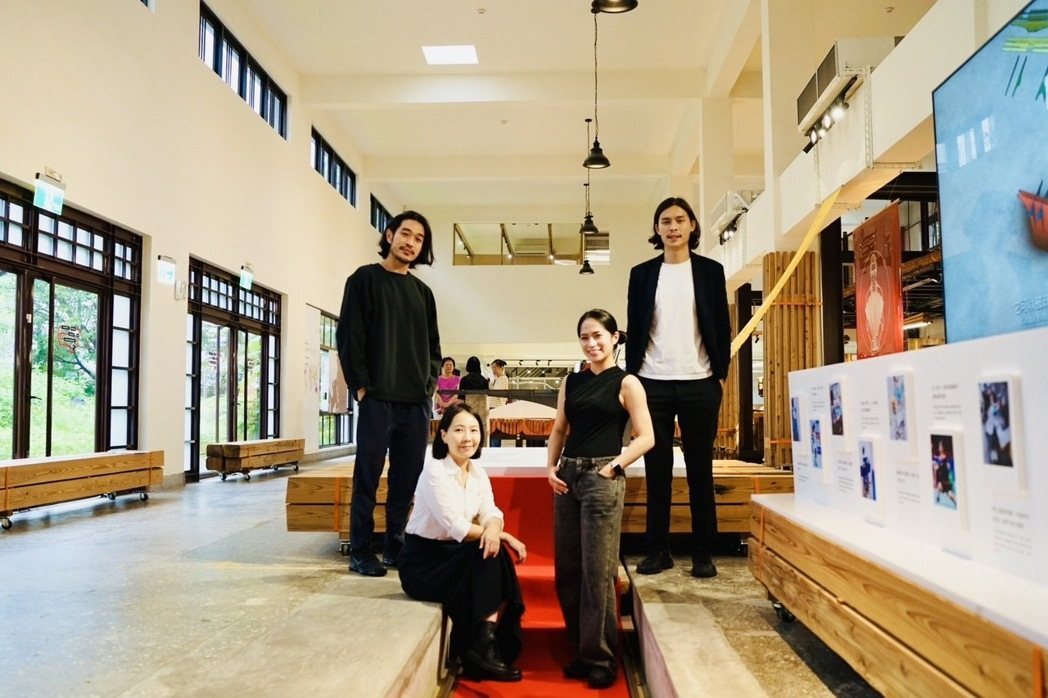
Chen Yi-feng of Sange Shan Creative Arts Studio and Ku Wan-ju of Ruyun Production co-curated this exhibition, and invited Wu Cho-hao, director of Cao Zhi Huang Di Zhi Zao Suo, and architect Cheng Li-yu of Cheng Si Architects to join forces. Provided by the organizer.
Both a patient's mother and the patient group's board chair, Yang Fang-mei hopes the art exhibition will foster a friendlier, more inclusive social atmosphere
Yang Fang-mei, board chair of the Association for the Care of People with Achondroplasia, R.O.C., took her not-yet-one-year-old son to the doctor 27 years ago because of abnormalities in his limbs and head shape, and he was diagnosed with achondroplasia. Along the way, whether accompanying her own child or the association's members, she watched them face unfriendly school environments and verbal bullying from classmates during their school years, leading to long-term lack of self-confidence and the low, dispirited moments of hitting walls in job-seeking as adults. She has a deep understanding of the various misunderstandings and inequalities that patients and their families may suffer. Board chair Yang says she hopes the art exhibition can open a dialogue between the public and the rare-disease community, along with the empathy of putting oneself in another's place, creating a warmer, friendlier social atmosphere for rare-disease patients.
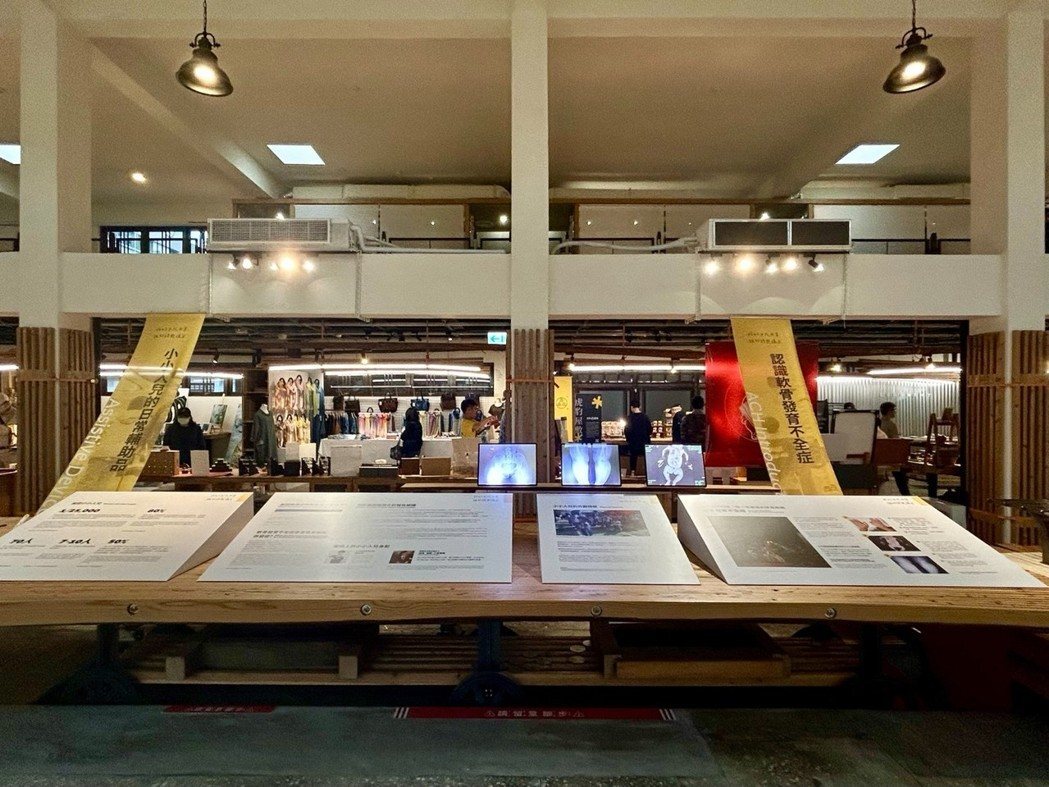
The exhibition exploring rare disease, "My Ordinary Everyday, Someone Else's Poetry and Distant Horizons: Drop 30 Centimeters and Step into Life with the Rare Disease 'Achondroplasia,'" opens today (11_12) and runs through 11_17 as a free public-interest exhibition at the Nangang Bottle Cap Factory. Provided by the organizer.
Highlight 1. Step onto the red-carpet track lowered by 30 centimeters and experience daily life from a little person's viewpoint
Former Songshan Cultural and Creative Park curator Chen Yi-feng and Ku Wan-ju of Ruyun Production co-curated this exhibition. The team explains that the exhibition title "My Ordinary Everyday, Someone Else's Poetry and Distant Horizons" not only poses a question to the public but also echoes the "ordinary" that the rare-disease community longs for and that deserves reflection—including not being stared at because of one's height or appearance, going to school, working, and daily life not being frustrated or restricted by disease, and hopes for National Health Insurance policy benefits and healthcare equity. For this reason, a roughly 30-centimeter-deep, red-carpeted track is set up in the center of the exhibition, inviting visitors to lower their height and walk into a cramped, semi-open space to experience the everyday viewpoint of people living with achondroplasia, as well as the awkwardness and discomfort of being watched with strange looks even when trying to keep a low profile.
Highlight 2. The installation artwork "EVEN Bench" points directly to a diverse society's tolerance of and coexistence with difference
The exhibition specially invited Wu Cho-hao, director of Cao Zhi Huang Di Zhi Zao Suo, and architect Cheng Li-yu of Cheng Si Architects to create together. Taking spatial expertise as their entry point, the two creators built an abstract narrative made exclusively for this exhibition, "EVEN Bench." The work is formed by interlocking and layering laser-cut black iron and waterjet-processed stone; although the two are intrinsically different in nature, through a rational, precise manufacturing process and structural analysis, components of differing scale and material ultimately combine into a stable, harmonious work, symbolizing how different groups in society interconnect and support one another. The smooth, crisp edges on the sides of the stone and the rough, raw chiseled surface on top also translate the elegance and habit we take for granted when facing the mainstream public, as well as the raw state that emerges from a lack of experience in facing rare-disease patients. Wu Cho-hao says: "A chair is the most ordinary of everyday objects, but seen from a little person's height it may be one of the many challenges to face in daily life. So through the height differences and balance design of 'EVEN Bench,' we hope to let viewers appreciate the fairness and difference hidden in everyday life. The homophone in the work's name also gives voice to the disadvantaged rare-disease community's urgent longing for 'equality.'"
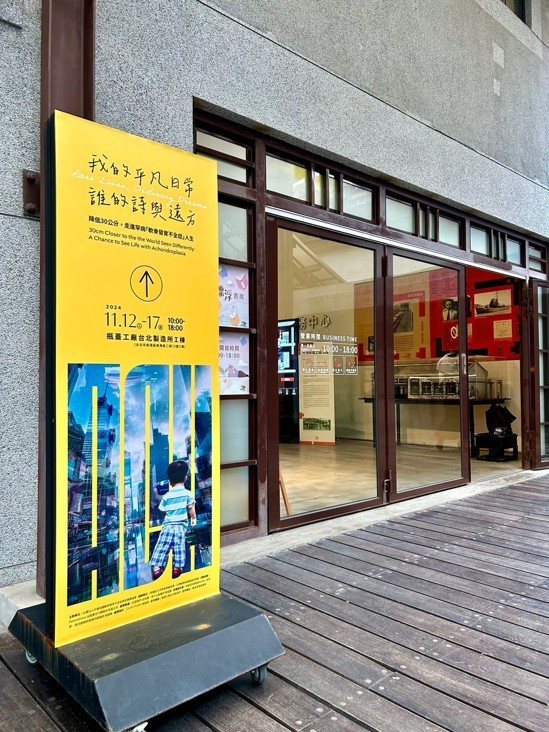
The exhibition exploring rare disease, "My Ordinary Everyday, Someone Else's Poetry and Distant Horizons: Drop 30 Centimeters and Step into Life with the Rare Disease 'Achondroplasia,'" opens today (11_12) and runs through 11_17 as a free public-interest exhibition at the Nangang Bottle Cap Factory. Provided by the organizer.
Highlight 3. A life-hack-worthy collection of everyday assistive aids
To present the real face of life with achondroplasia, the curatorial team and the association jointly gathered about 15 special everyday assistive aids to share with the public. Tsai Yi-lin, a Taiwanese Paralympic badminton athlete who is also a patient, felt especially moved by this zone's exhibits. She says that because little people face problems such as short stature, short limbs, trident hands, a limp, or weak legs, they have countless big and small difficulties to overcome across food, clothing, housing, and transportation. Parents, relatives, and friends always find ways to search everywhere for handy living aids so they can independently get through the day smoothly—from magical utensils that switch in a second between chopsticks and a spoon, to a little tool for grabbing toilet paper in the bathroom; from a reacher for taking down high objects to a folding stool for boarding the bus; from a faucet extender to an effort-saving can opener. Every one is a magical little life-hack item, and when she travels abroad to compete she often wants to bring them all along to show off to athletes from other countries in the athletes' village.
Taiwan Foundation for Rare Disorders: National Health Insurance policy's care for rare disease not only stabilizes society but also embodies the nation's humanitarian concern and respect for life
Chen Li-yin, founder of the Taiwan Foundation for Rare Disorders, says that according to the September 2024 statistics on reported rare-disease cases from the Health Promotion Administration of the Ministry of Health and Welfare, there are 438 people with achondroplasia in Taiwan, of whom about 70 are minors under age 14. Behind these numbers are not only patients whose bodies and minds suffer from the disease due to failure to grow tall and serious complications, but also parents, relatives, and friends anxious about their children's future and treatment—together forming one disadvantaged rare-disease family after another. National Health Insurance policy's care for rare disease therefore not only stabilizes society but also embodies the nation's humanitarian concern and respect for life. She hopes all who visit the exhibition can exercise a powerful social influence, making "understanding," "respect," and "equality" Taiwan's most beautiful civic virtues and social values.
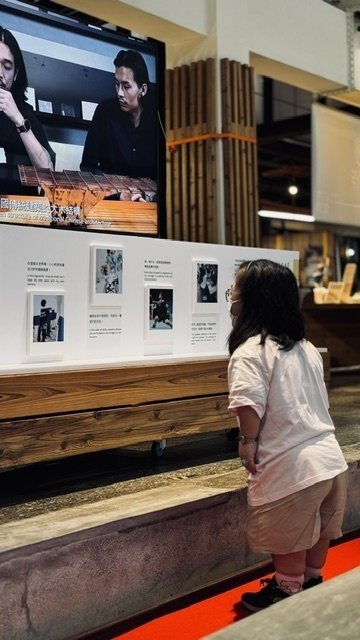
Former Songshan Cultural and Creative Park curator Chen Yi-feng and Ku Wan-ju of Ruyun Production co-curated this exhibition; the team explained the exhibition title "My Ordinary Everyday, Someone Else's Poetry and Distant Horizons." Provided by the organizer.
My Ordinary Everyday, Someone Else's Poetry and Distant Horizons: Drop 30 Centimeters and Step into Life with the Rare Disease "Achondroplasia"
Venue | Building I, Bottle Cap Factory Taipei Manufacturing Place (Building I, No. 13, Section 2, Nangang Road, Nangang District, Taipei City)
Opening press conference | 2024/11/12 (Tue) 2:00–3:30 p.m.
Exhibition dates | 2024/11/12 (Tue) – 11/17 (Sun) 10:00 a.m. – 6:00 p.m.
Organizer | Association for the Care of People with Achondroplasia, R.O.C.
Co-organizers | Taiwan Foundation for Rare Disorders, Taiwan Alliance for the Rights of Disadvantaged Patients
Event coordination | PatientsForce Media-WIND Communications Co., Ltd.
Exhibition planning | Ku Wan-ju of Ruyun Production, Chen Yi-feng of Sange Shan Creative Arts Studio
Participating creators | Wu Cho-hao of Cao Zhi Huang Di Zhi Zao Suo, architect Cheng Li-yu of Cheng Si Architects
Exhibition design | Chang Chi-chun of CCUN STUDIO
Partner venue | Bottle Cap Factory Taipei Manufacturing Place
Partner | GIS Group