

Media-WIND Health backs late-night street family-medicine outreach, healing the wounds of those struggling to live on the streets
AI-translated from the Chinese original · editorially reviewed
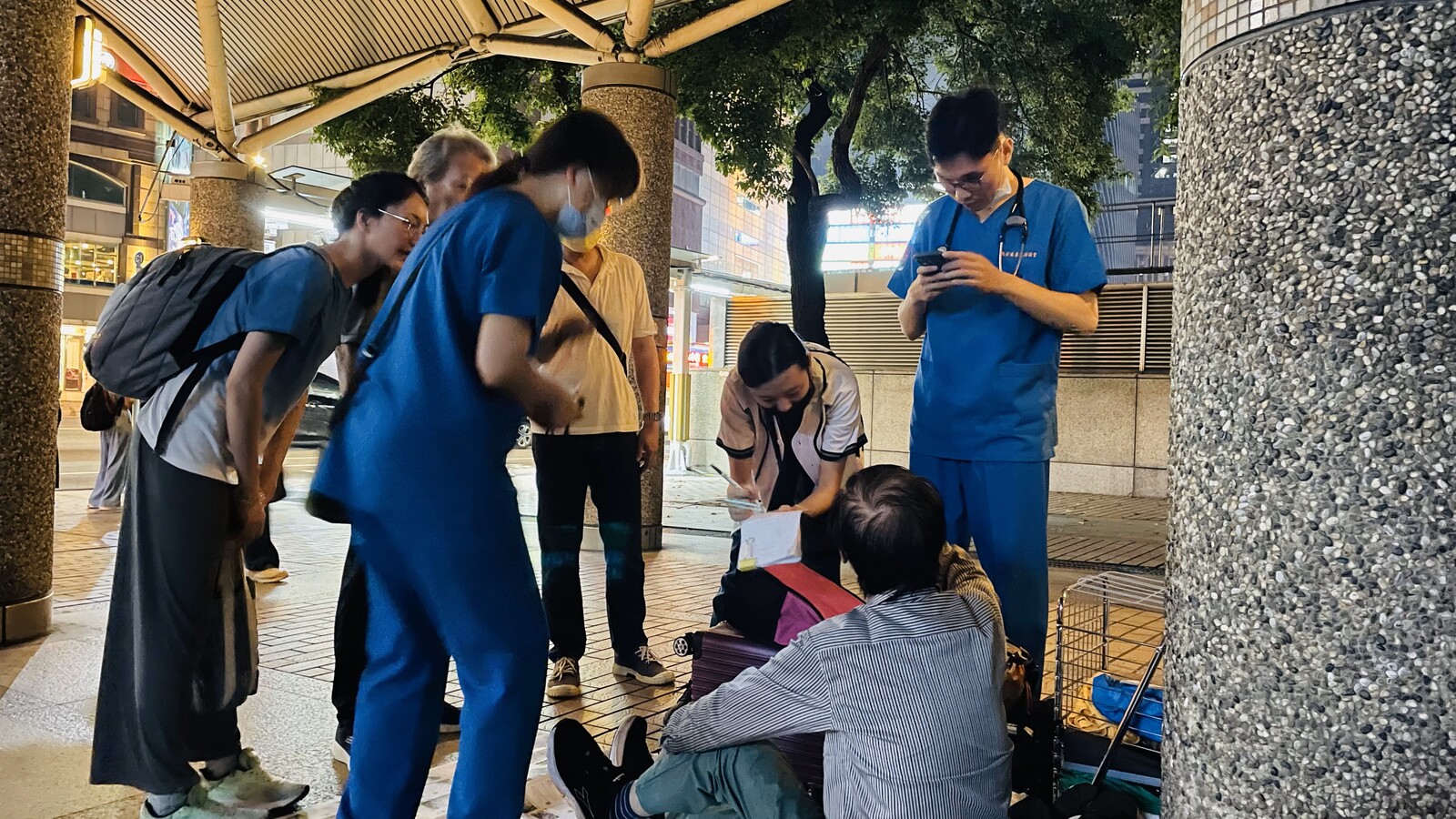
In Taiwan there is still a group of people who have National Health Insurance yet dare not use it to see a doctor. According to Ministry of the Interior statistics, Taiwan has around 3,000 homeless people living on city streets, nearly half of whom once held jobs; high-risk manual labor and unstable housing have left them with many accumulated wounds and chronic ailments. Because going to a hospital means facing society's disapproving stares and worrying that they are wasting public resources, they dare not seek care.
PatientsForce Media-WIND Health Group chairman Sean Chang notes that of the United Nations' 17 Sustainable Development Goals (SDGs), the very first is "No Poverty." Anyone can fall into poverty for all kinds of reasons; homeless people who end up on the streets because of hardship are often out of place in society's daily life, and because they lack a fixed address or physical home, even government social-welfare mechanisms often cannot reach them precisely. Every Mid-Autumn Festival, Media-WIND Health funds social organizations instead of giving mooncakes. This year (2024), Media-WIND Health supported the Si-An Charity Service Association's street family-medicine service, sponsoring essential medical supplies such as 3M medical stethoscopes, cleansing bath wipes, hydrocolloid dressings, and medical tape, so the association can continue providing medical care for homeless people.
"Every homeless person on the street has a reason they had no choice but to 'wander.'"
Lee Yi-sheng of the Taiwan Si-An Charity Service Association says that hundreds of homeless people live in and around Taipei Main Station, including former business owners, highly educated professors, teachers, civil servants, and people from all kinds of backgrounds. Over many years of poverty-relief work, he has found that homeless people who end up on the streets for various reasons endure long-term physical and mental hardship, are used to bearing it, or lack awareness that they are ill; by the time their health deteriorates badly enough to require medical intervention, it is often too late to reverse. The association therefore found a group of young, dedicated physicians and nurses who form a street family-medicine team each month and, in the late-night hours after their shifts end, take to the streets to treat homeless people's ailments and wounds, protecting their basic rights to healthcare and survival.
Lee Yi-sheng shares that during the pandemic, to comply with society's disease-prevention atmosphere, homeless people wore masks almost 24 hours a day. One elderly man who lacked awareness that he was ill had let the mask's ear loop nearly slice through his entire ear, leaving only a small part still attached; he urgently needed medical help. Such situations occur again and again on city streets, further strengthening the association's determination to bring medical care to the streets.
Feeling that healthcare equity should be realized in every corner of society, Sean Chang says he hopes more people will pay attention to the medical rights of the homeless minority. He also thanked the Si-An Charity Service Association for organizing medical staff, treatment sites, social workers, and follow-up care workers. Through the attention and support of businesses, they jointly put the SDGs into practice, so that public and private cooperation can help homeless people receive at least the medical care that human dignity deserves.