

AI-powered senior home nursing and patient care companionship
AI-translated from the Chinese original · editorially reviewed
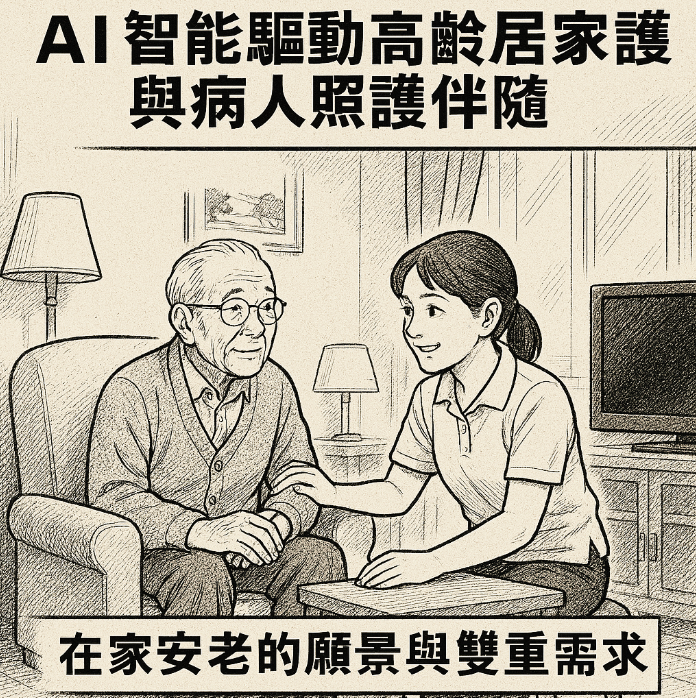
The vision of aging at home and its dual needs
As the world grows older, Taiwan's pace of aging is especially striking, and demand for long-term care keeps climbing. Against this backdrop, "aging in place" — growing old at home — is the wish of the vast majority of older adults. Yet traditional home care models face multiple challenges: workforce shortages, cost pressure, heavy burdens on family caregivers, and the loneliness and social isolation older adults may experience.
Artificial intelligence (AI) has emerged to meet these challenges, not only transforming home nursing but also pioneering a new model of Patient Care Companion Services. AI is no longer limited to health monitoring and safety protection; it now extends to emotional support, social interaction, and cognitive stimulation, addressing older adults' physical, psychological, and social needs alike — so that aging at home is not just safe and independent, but warm and connected.
The core of AI home nursing and companion services: technology-enabled wellbeing of body and mind
At the heart of AI-driven home nursing and companion services is the use of smart technology to assist older adults, family caregivers, and professionals — enhancing independence, safety, comfort, and emotional connection at home, rather than replacing the irreplaceable warmth of human interaction 21. This model integrates several key technologies:
Home environment sensing and the Internet of Things (IoT): Contactless sensors deployed around the home (such as activity-sensing floor mats, smart mattresses, and infrared/radar sensors), wearables (such as smartwatches and wristbands 32), and smart appliances form a comprehensive home data network that continuously monitors older adults' activity, physiological state, and environmental safety.
Health data analytics and prediction: AI algorithms analyze the collected data to identify health risks (such as falls, worsening chronic conditions, and cognitive decline), provide early warnings, and enable preventive, personalized home health management.
Virtual assistants and social robots: AI-driven virtual assistants (such as Alexa and Google Assistant) and social/companion robots designed for seniors (such as ElliQ, PARO, and PECOLA) are the core of companion services. Using natural language processing (NLP) and emotion recognition, they provide conversational interaction, emotional support, cognitive stimulation, and task reminders.
Home safety technology: This includes AI fall-detection systems using computer vision or sensors, smart locks, and environmental hazard detection (such as gas leaks and fire), building an all-around home safety net.
The many applications of AI in home nursing and companion services
AI technology is weaving smart care and warm companionship into older adults' home lives in the following ways:
Round-the-clock health monitoring and early warning: Non-invasive sensors or wearables at home continuously track heart rate, blood pressure, sleep quality, activity levels, and more. AI analyzes the data to detect anomalies or emerging risks early (such as arrhythmia, signs of infection, or elevated fall risk) and alerts family members or medical staff, enabling preventive care.
A smart safety net: AI fall-detection systems automatically raise the alarm within moments of an accident. Features such as smart geofencing and bed-exit alerts provide extra protection for seniors with dementia or limited mobility. Virtual assistants can also help place emergency calls.
A thoughtful life manager: Virtual assistants or home robots proactively remind older adults to take medication on time, drink water, exercise, and attend follow-up appointments. They can also help manage daily schedules, control smart appliances, and handle online shopping or bill payments, easing the burden of memory and everyday chores.
A warm AI companion: Social robots and virtual assistants are important tools for countering loneliness in older adults. They provide companionship through natural conversation, storytelling, music, and interactive games. Some advanced systems can even recognize and respond to seniors' emotions, offering more empathetic interaction. Research shows such interaction can significantly reduce loneliness.
A personal trainer for the brain: AI-driven cognitive training games and apps deliver personalized mental workouts that help maintain or improve memory, attention, and other cognitive functions, delaying dementia symptoms. Social robots can also provide cognitive stimulation through interactive games and reminiscence therapy.
A seamless communication bridge: AI facilitates communication between older adults, their families, and care teams. For example, AI systems can automatically compile a senior's daily activity and health data into reports for family members or telehealth teams, while AI translation helps overcome language barriers.
Challenges and ethical considerations: proceeding carefully with smart home care
Despite the great promise of AI home nursing and companion services, their rollout demands careful attention to the following challenges and ethical considerations:
The boundaries of home privacy: Deploying sensors and monitoring devices in intimate home spaces raises concerns about violations of personal privacy (visual, audio, and activity data). Balancing safety needs with respect for privacy is the foremost issue. Data security, anonymization, and fully informed consent from older adults and their families must be ensured.
Preserving autonomy: While AI monitoring and recommendations can improve safety, they can also over-intervene in seniors' lifestyles and restrict their freedom of choice. AI should serve as an assistive tool; final decisions should remain with older adults or those they trust.
The ethical dilemmas of AI companions: Can an AI companion provide a "real" emotional connection? Could over-reliance deepen social isolation or foster unhealthy attachment? Are there risks of deception (especially for people with cognitive impairment) or emotional manipulation? These questions require deep discussion and regulation.
Technology acceptance and the digital divide: Older adults may resist AI technology due to unfamiliarity, complexity, distrust, or a sense that they do not need it. Friendlier design and adequate educational support are needed, along with attention to the digital divide that economic or educational disparities can create.
Cost and accessibility: The cost of AI devices and services can be a barrier for many families, limiting adoption. More affordable models — such as rental or subscription plans — should be explored.
The value of human connection: We must guard against technology dependence reducing genuine human interaction. AI should complement, not replace, the unique emotional bonds and care that family, friends, and professional caregivers provide.
Putting people first to shape the future of home care together
AI-powered home nursing and patient care companion services are opening a new chapter in realizing the vision of aging at home. They not only enhance older adults' independence and safety at home, but through intelligent companionship and interaction, they ease loneliness and promote physical and mental wellbeing. Learn more about how PatientsForce Care Companion is putting this into practice in senior care.