

Toward home-based healthcare: what PSPs need in an era of decentralization
AI-translated from the Chinese original · editorially reviewed
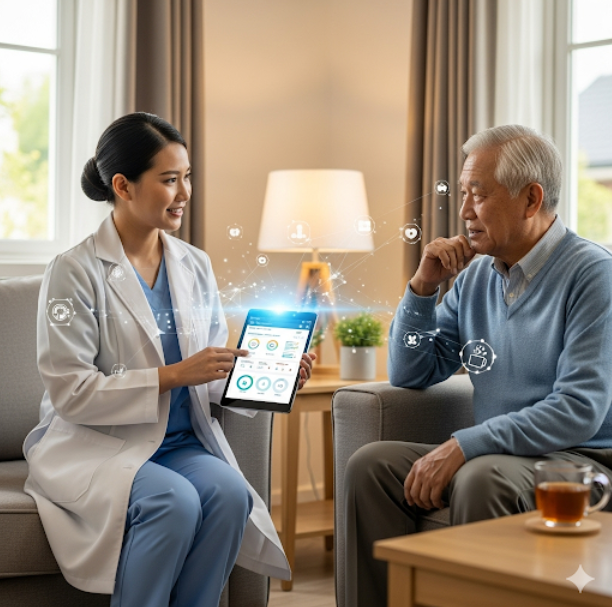
Home care and support needs for high-cost drugs in chronic disease management
In recent years, shifting healthcare demand and supply have been pushing health systems toward decentralization. In the United States, more and more insurers and PBMs (Pharmacy Benefit Managers) are deploying payment tools such as Alternative Funding Programs (AFPs), Copay Accumulators, and Copay Maximizers—tightly controlling reimbursement for high-priced emerging drugs and shifting the financial pressure onto pharmaceutical companies, which leaves patients facing more barriers to treatment.
Under the AFP model, for example, insurers may exclude certain high-priced drugs from coverage, making patients appear uninsured and steering them toward Patient Assistance Programs (PAPs) to cover drug costs. This has directly caused PAP service volumes within PSPs to surge, forcing the pharmaceutical industry to respond in more flexible, scalable ways.
Under this financial pressure, the industry must rethink its PSP model. Traditional fully outsourced models may not be able to respond in real time to these complex, ever-changing payer strategies. Hence the move toward a hybrid decision-making model, integrated into internal information systems, to better control the patient and HCP experience and gain more comprehensive data insights. This shift responds to needs created as hospital decentralization extends patient and HCP interactions beyond the hospital walls.
The complexity of home care: challenges beyond logistics
When treatment moves from the hospital to the home, the patient's role shifts from passive recipient to active manager, and the challenges facing PSPs escalate accordingly. The complexity of home care goes well beyond drug delivery logistics, spanning patient education, medication adherence monitoring, side effect management, and emotional support.
For patients who must self-inject or self-infuse at home, PSPs must provide comprehensive training and guidance to ensure medicines are used correctly and safely. In the past, most of this education was delivered by in-hospital nurses or specialists. In the home care model, PSPs must fill that service gap through telehealth, in-home visits by professional nurses, or digital tools. Patient satisfaction with telehealth nurse support is extremely high, proving how indispensable professional talent is in home care.
Medication adherence is an even more central challenge in home care. Without clinical supervision, patients easily forget doses or stop treatment on their own because of side effects. Going forward, PSPs will integrate technologies such as artificial intelligence (AI) and data analytics to precisely predict which patients are at risk of dropping off, and provide timely intervention and support through personalized, multi-channel communication to keep patients on their full course of treatment.
Technology-enabled: a new PSP blueprint for home care
Technology-first: from passive support to active enablement
Traditional PSPs have relied largely on labor-intensive services, but that model cannot scale to meet the enormous demands of home care. Reports highlight the rise of demand for "technology-first" PSPs—providers that treat technology as the core, not merely a supporting tool.
The Digital Hub concept is one example. Interoperable technology can automate tasks such as electronic benefit verification (e-BV) and electronic prior authorization (e-PA), reserving human intervention for the most complex cases that truly need human interaction. It also shortens time-to-therapy and lets PSP staff focus their energy on delivering higher-value patient services.
AI and big data: the keys to personalization and precision
In home care, every patient's journey is unique. PSPs must be able to tailor services to individual needs—and AI and big data are the keys to making that possible.
AI is already being applied across PSP development in multiple scenarios, including operational efficiency gains, patient coverage determination, personalized patient engagement, and conversational intelligence analysis. For example, AI can use patient data to precisely predict likely discontinuation points and, through personalized communication, deliver the right message at the right time through the right channel. This not only improves medication adherence but also makes patients feel valued and cared for.
But AI is not a cure-all. In some scenarios, such as patient coverage determination, AI relies on large volumes of historical data for its predictions and may risk inaccuracy. Only by combining it with direct links between payer insurance and PSP information can data timeliness and accuracy be assured—the need for information exchange never goes away.
Repositioning professionals for new roles
The healthcare-benefits talent shortage and digital transformation
Even as technology plays a growing role in PSPs, the value of professionals has not been displaced. On the contrary, as home care grows more complex, the bar for PSP talent keeps rising. Skilled PSP staff need not only expertise in diseases, routes of administration, and insurance design, but also the empathy to help patients and HCPs navigate the challenges of a complex healthcare system.
Post-pandemic talent shortages and changing work patterns pose new challenges for PSPs as well. Traditional remote work models can lead to uneven service quality. PSP providers must therefore establish clear recruitment, training, and performance management processes, and ensure their teams keep developing to meet evolving market demands.
The professional's new role: value creator in human-machine collaboration
In the new "technology-first" PSP model, the role of PSP professionals is being redefined. They are no longer mere executors of administrative tasks, but value creators working in partnership with machines.
Automated Advanced eServices free PSP staff from tedious paperwork, giving them more time for meaningful conversations with patients and HCPs. Patient journey management systems surface real-time information on drug support program details, prior authorization requirements, copays, and PAP eligibility. This lets PSP staff grasp the situation instantly at the first point of contact and offer warm, professional guidance.
This model not only boosts efficiency but also lets PSP staff focus on providing empathy and emotional support—the core value in home care that no technology can replace.
For pharmaceutical companies, partnering with professional PSP providers like PatientsForce not only helps navigate payer strategies and regulatory challenges, but also builds a differentiated patient experience and strengthens collaboration among industry, medicine, and patients.
For investors, the value of PSPs has moved beyond "cost center" to strategic asset—driving drug accessibility, patient adherence, and the sustainable growth of pharmaceutical brands. Understanding how PSPs will evolve after "decentralization" will be the key for every healthcare professional and investor to stay ahead in the next cycle of healthcare competition.