

Helping patients bridge the National Health Insurance coverage gap: Patientsforce's innovative solutions
AI-translated from the Chinese original · editorially reviewed
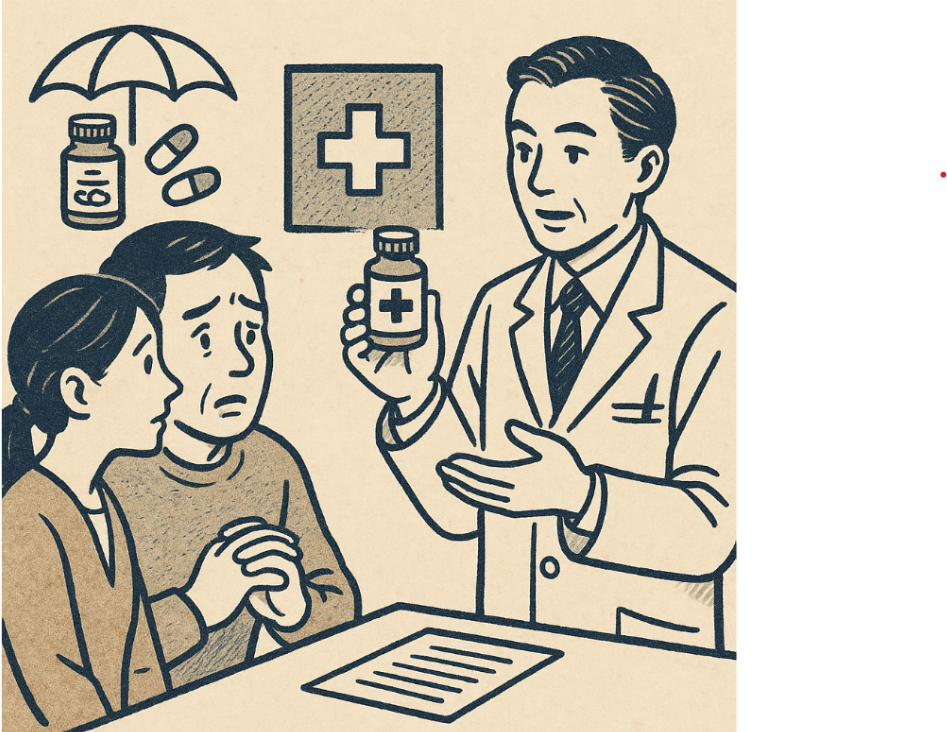
The Ministry of Health and Welfare's National Health Insurance Administration recently announced plans to expand reimbursement coverage for a number of drugs starting June 1, 2025, including cancer immunotherapy drugs, the Olaparib-based targeted therapy for ovarian, pancreatic, prostate, and breast cancer, the Bevacizumab-based targeted therapy for ovarian cancer, and the monoclonal antibody Palivizumab used to prevent respiratory syncytial virus (RSV) in premature infants. Many of these drugs are key items currently supported under Patientsforce's Patient Assistance Program (PAP), which helps patients access treatment during the self-pay stage. This move undoubtedly brings hope to patients who have waited a long time, but it also once again highlights the many obstacles that remain between a new drug's approval and its widespread adoption.
Overview of Taiwan's specialty drug market and the long wait for NHI reimbursement
Facing the coverage gap before NHI reimbursement, as well as the funding caps or special conditions that may apply after reimbursement begins, Patientsforce's PAP program offers a comprehensive solution for both pharmaceutical companies and patients.
However, the process of bringing a new drug into NHI reimbursement is often quite lengthy. Only after a pharmaceutical company obtains a drug license from Taiwan's Food and Drug Administration (TFDA) can it submit a reimbursement application to the National Health Insurance Administration. The subsequent review process — including Health Technology Assessment (HTA), expert meetings, and the Pharmaceutical Benefit and Reimbursement Scheme (PBRS) joint deliberation meeting — involves negotiation among multiple parties and rigorous evaluation. Based on past research data, it can take on average more than 400 days from application to formal NHI reimbursement approval, and the wait for cancer drugs can exceed 700 days. Although the National Health Insurance Administration has in recent years worked to accelerate the review process — for example, by promoting parallel review for certain drugs with a target of shortening the timeline to 6 to 10 months — unpredictable delays and case-by-case variation still exist. This "coverage gap" can reduce patients' chances of receiving optimal treatment in time, and it also creates uncertainty for pharmaceutical companies' market planning and revenue expectations.
An accelerator for pharma market entry and a safety net for patients
Facing the coverage gap before NHI reimbursement, as well as the funding caps or special conditions that may apply after reimbursement begins, Patientsforce's PAP program offers a comprehensive solution for both pharmaceutical companies and patients.
Value for pharmaceutical companies:
- Compliant, rapid entry into the self-pay market: While strictly complying with regulations, helps pharmaceutical companies quickly establish a presence in the self-pay market, reach early adopters, and build brand awareness.
- A flexible support system: We provide a standardized, modular, and parameterizable support system. This system flexibly adapts to the workflows of hospitals at different levels, physicians' prescribing habits, and patients' individual medical needs and financial circumstances.
- Improving access to and affordability of medicines: Through drug cost support, drug donation, and other means, lowers the threshold for patients to use the medication and expands its reach.
- Flexible drug cost-sharing plans: For drugs with partial NHI reimbursement or a reimbursement cap, we can design an "early enrollment, later-stage support" model — for example, subsidizing the patient's out-of-pocket difference, or providing support once the annual reimbursement quota has been used up.
- Accumulation of real-world data: Running the PAP program helps collect real-world data (RWD) and real-world evidence (RWE) on patients after taking the medication. This data is highly valuable for subsequent NHI price negotiations, market strategy adjustments, and even academic research.
Value for patients:
- Reducing financial pressure: Directly lowers the economic barrier of self-paid medication, helping to avoid the "financial toxicity" that can push patients into poverty due to illness.
- Earlier access to innovative treatment: Patients no longer miss the golden window for treatment while waiting for NHI reimbursement.
- Improving treatment adherence: Stable drug supply and financial support help patients complete their treatment course as prescribed, improving treatment outcomes.
Market innovation for access to medicine
In the foreseeable future, as more high-cost innovative drugs come to market, the limited nature of NHI resources and the rigor of the review process will make the "reimbursement coverage gap" the norm. Against this market backdrop, the strategic value of the PAP program is becoming increasingly clear:
- A key driver of market access: Patientsforce helps pharmaceutical companies shorten the time from product launch to actual sales in a highly competitive market, seizing first-mover advantage.
- Maximizing lifecycle value of the drug: From self-pay market education in the early launch stage to supplementary support after NHI reimbursement begins, the PAP program can effectively extend a drug's market vitality and revenue contribution.
- Steady market demand: Patients' need for innovative treatment and financial support persists, providing a stable market foundation for PAP services.
- Enhancing corporate social responsibility and brand image: Giving back to society through the PAP program and helping patients in need is a concrete expression of a pharmaceutical company's corporate social responsibility (CSR), and it can effectively enhance the company's public image and brand reputation.
The NHI reimbursement coverage gap is a common challenge facing the pharmaceutical industry today. A professional, compliant, and innovative patient assistance program can effectively bridge pharmaceutical companies, healthcare institutions, and patients, shortening the time patients wait for innovative treatment
Note: The review timeline for bringing a new drug into NHI reimbursement varies case by case. The number of days cited here reflects average or median figures mentioned in past academic research or industry reports; actual circumstances should be based on official announcements from the National Health Insurance Administration.
Some material referenced from:
- Lin, Y. J., et al. (2018). New Drug Reimbursement and Pricing Policy in Taiwan. Journal of Forming Medical Association. (cites an average of 742 days for cancer drugs)
- Chen, L. F., et al. (2020). Reimbursement Lag of New Drugs Under Taiwan's National Health Insurance System Compared With United Kingdom, Canada, Australia, Japan, and South Korea. Clinical Therapeutics. (cites a median of 458 days under the second-generation NHI system)
- Relevant announcements from the Ministry of Health and Welfare's National Health Insurance Administration (mentioning the target timeline for parallel review).
- NHI's new June rules: expanded reimbursement for immunotherapy and targeted therapy benefits four cancers including ovarian cancer, Knews 2024/6/1 https://www.knews.com.tw/news/F3C18771F145FB272E60F41847BB33F1