

How the PatientsForce Patient Support Program improves medication adherence: an outcomes analysis
AI-translated from the Chinese original · editorially reviewed
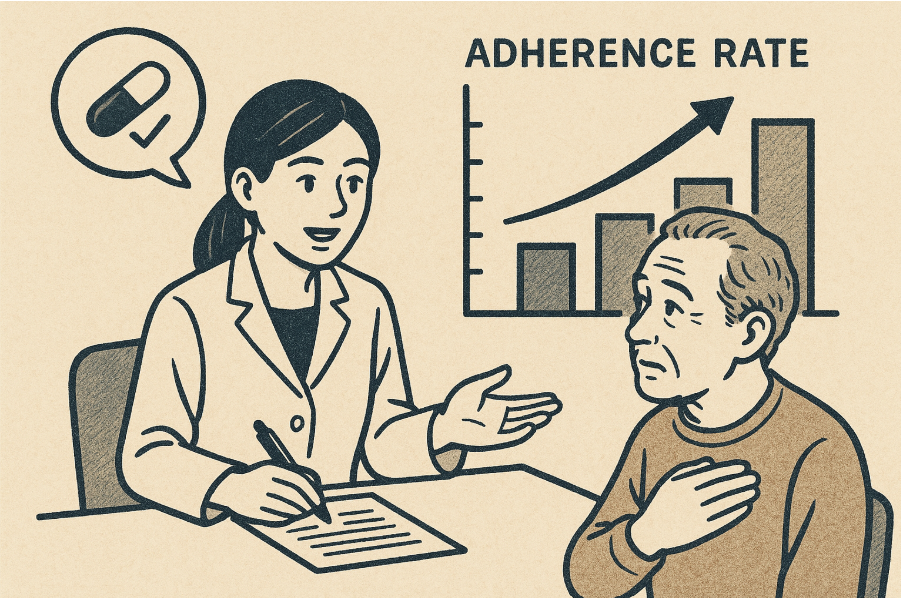
Take the Patient Support Program that Media-WIND Health Strategies runs for a certain biologic as an example. Through systematic health educator services, patients learn why treatment matters, receive companionship throughout the treatment journey, and build stable physician-patient relationships. In the program's first year (FY23), overall medication adherence averaged 89%, rising to 90% in the second year (FY24)—a steady upward trend.
The chart below shows monthly medication adherence across the two fiscal years:
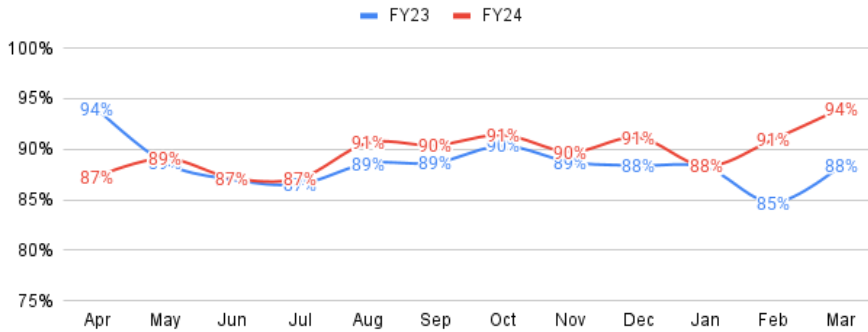
The chart shows that, apart from early FY23—when figures ran slightly high because enrollment was not yet complete during the project transition and some patients who missed follow-up visits were excluded from the statistics—FY24 adherence was generally better than the same months a year earlier, demonstrating the clear effectiveness of our patient support strategy.
Factors affecting medication adherence
Despite stable overall performance, some months still showed noticeable swings. In June and July of both years, more physicians traveled abroad for academic conferences and some hospitals scheduled clinic closures, reducing the number of returning patients. February 2024 (FY23) and January 2025 (FY24) coincided with the Lunar New Year holidays, which also disrupted patients' visit schedules and lowered adherence.
Taking March 2025 as an example, the reasons patients did not adhere to treatment that month break down as follows:
- 73% could not return for their visit due to personal factors (such as work, family, or unexpected events)
- 11% could not return on schedule due to prior authorization issues (rejected, under review, or approved doses reduced)
- 12% were self-paying patients who did not return, and thus fell outside the scope of health educator follow-up
- 4% paused treatment due to adverse events after medication or on their physician's advice
The health educator intervention model and its real-world results
In this program, health educators actively establish contact with patients from the moment of enrollment, providing health education, visit reminders, and medication care through regular phone calls and in-person visits. For patients who suddenly cannot make a visit, educators proactively reach out to reschedule, preventing treatment interruptions that could undermine efficacy or trigger relapse. For patients whose NHI-approved doses have been reduced and who cannot return monthly, educators continue to monitor their condition; if extending the treatment interval leads to a relapse, they proactively help patients work with their physicians on the NHI appeal mechanism to restore the approved doses so treatment can continue.
The sustained intervention and service of Patient Support Program health educators has delivered a clear improvement in medication adherence and effectively reduced the risk of treatment interruption. Going forward, we will continue to use data analysis and quality improvement mechanisms to refine health educator workflows and further raise the quality of patient care and treatment outcomes.