

A lack of cancer drug information: patients need clearer treatment pros and cons
AI-translated from the Chinese original · editorially reviewed

Licensed reprint: Pharma Statistics Insights
For cancer patients, understanding the pros and cons of their treatment drugs is crucial. However, a study published in the BMJ on the European market found that the information pharmaceutical companies provide to patients often lacks the necessary detail, making it difficult for patients to make informed decisions—which may have a negative effect on communication and treatment decisions between patients and healthcare professionals. The article calls for greater information transparency, especially by providing more detailed, accurate, and practical information through channels such as the internet and customer service hotlines, to help patients make appropriate treatment choices.
Do patients know the pros and cons of using cancer drugs?
According to a study published in the BMJ, patient information leaflets (PILs) usually lack the details that would enable patients to make decisions—in other words, pharmaceutical companies mostly fail to let European patients understand the pros and cons of cancer drugs.
This study evaluated 29 cancer drugs approved in Europe between 2017 and 2019, assessing the following three items and comparing them with the European Public Assessment Report (EPAR) to understand the gaps in the information pharmaceutical companies provide to healthcare professionals, patients, and the public.
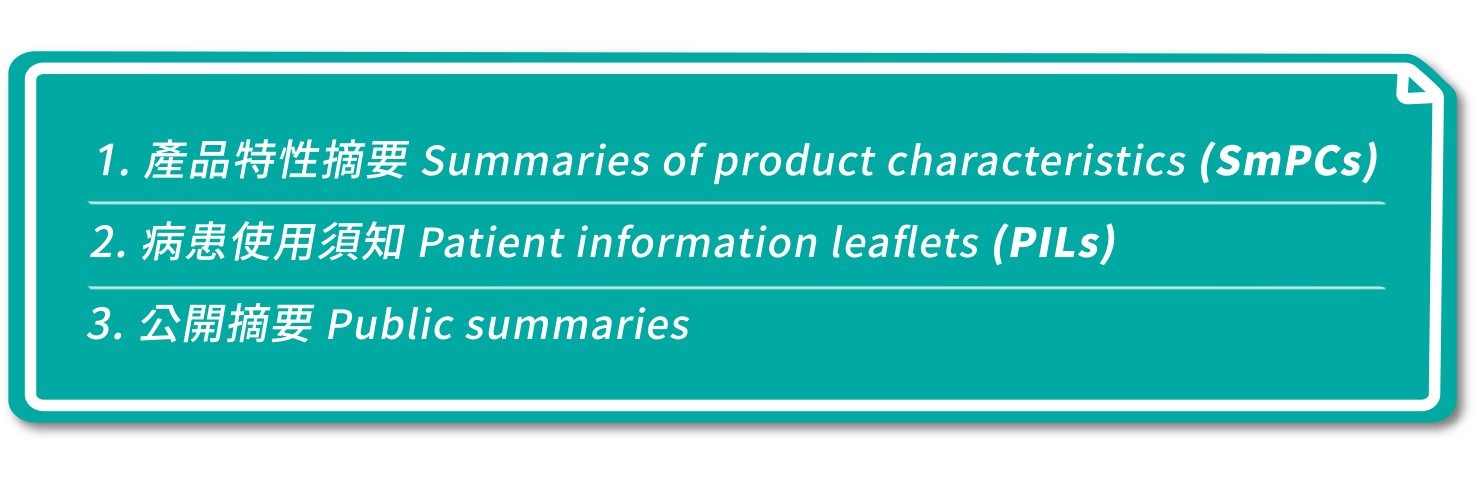
Patients face an information gap about the benefits of drugs
Most Summaries of Product Characteristics (SmPCs) mention the number of participants and the design of the main study, yet not a single patient information leaflet (PIL) tells patients how these cancer drugs were studied.
The same situation occurs with efficacy data: 72% of the cancer drugs' SmPCs mention results of extended survival, yet not a single PIL tells patients what benefits they can expect from the drug.
A lack of understanding of the drug may affect decisions
The study's authors state: "Our research focuses on the need to improve communication between prescription drugs and patients in Europe, such as the benefits and uncertainties of the medication—information that is especially important for terminally ill cancer patients who have little time left."
They also found that when patients have unrealistic expectations about the benefits of treatment, or place blind confidence in the clinical evidence, the decisions they make can cause harm.
The information gap
The study found that, over the period during which nearly all the cancer drugs were evaluated, the reliability of the evidence for the drugs' benefits was rarely conveyed to healthcare professionals or patients.
The reporting of trial design and trial results was sometimes inconsistent with the information in the European Public Assessment Report (EPAR) and could be misleading.
No way to compel drugmakers to include information in PILs
After identifying the problem, the authors propose some potential solutions.
Indeed, drug regulators currently cannot force pharmaceutical companies to include information on the benefits and uncertainties of medications in patient information leaflets (PILs). Moreover, the mechanism of action could become a claim of efficacy, which may somewhat conflict with the regulatory requirements of being precise, non-misleading, and non-promotional.
What do the authors recommend?
The authors recommend that drug regulators concentrate their efforts on ensuring that pharmaceutical companies provide relevant, accurate, and useful information to the public online, by revising the content format of public summaries to include details of a drug's benefits as part of a "Drug facts box" that is available for the public to consult online.
Enhance information transparency, especially by providing more detailed, accurate, and practical information online, to help patients make informed treatment decisions. In addition, drug regulators should urge pharmaceutical companies to provide a "Drug facts box," achieved by revising the format of public summaries. These improvements can enhance communication between patients and healthcare professionals and improve the quality of treatment decisions.
The content of this article has been licensed by Pharma Statistics Insights to PatientForce™ (Media-WIND Communications Co., Ltd. / Tax ID: 27903403). The intellectual property rights are jointly held by PatientForce™ and Pharma Statistics Insights in accordance with the law. If you believe this article infringes any rights, please contact the relevant department of our company by email, and we will respond as soon as possible.