

Media-WIND Health Group pioneers Drug Installment to ease drug costs for early-stage cancer
AI-translated from the Chinese original · editorially reviewed
Economic Daily News / reported by Su Xi-wen, 2023/03/04 09:00:00
"Doctor, the reimbursed drug is fine for me," "I split a single dose into two," "Let's save the money for my child's studies abroad first." Even in Taiwan, where medical resources are well developed, some patients still face a dilemma over their treatment choices.
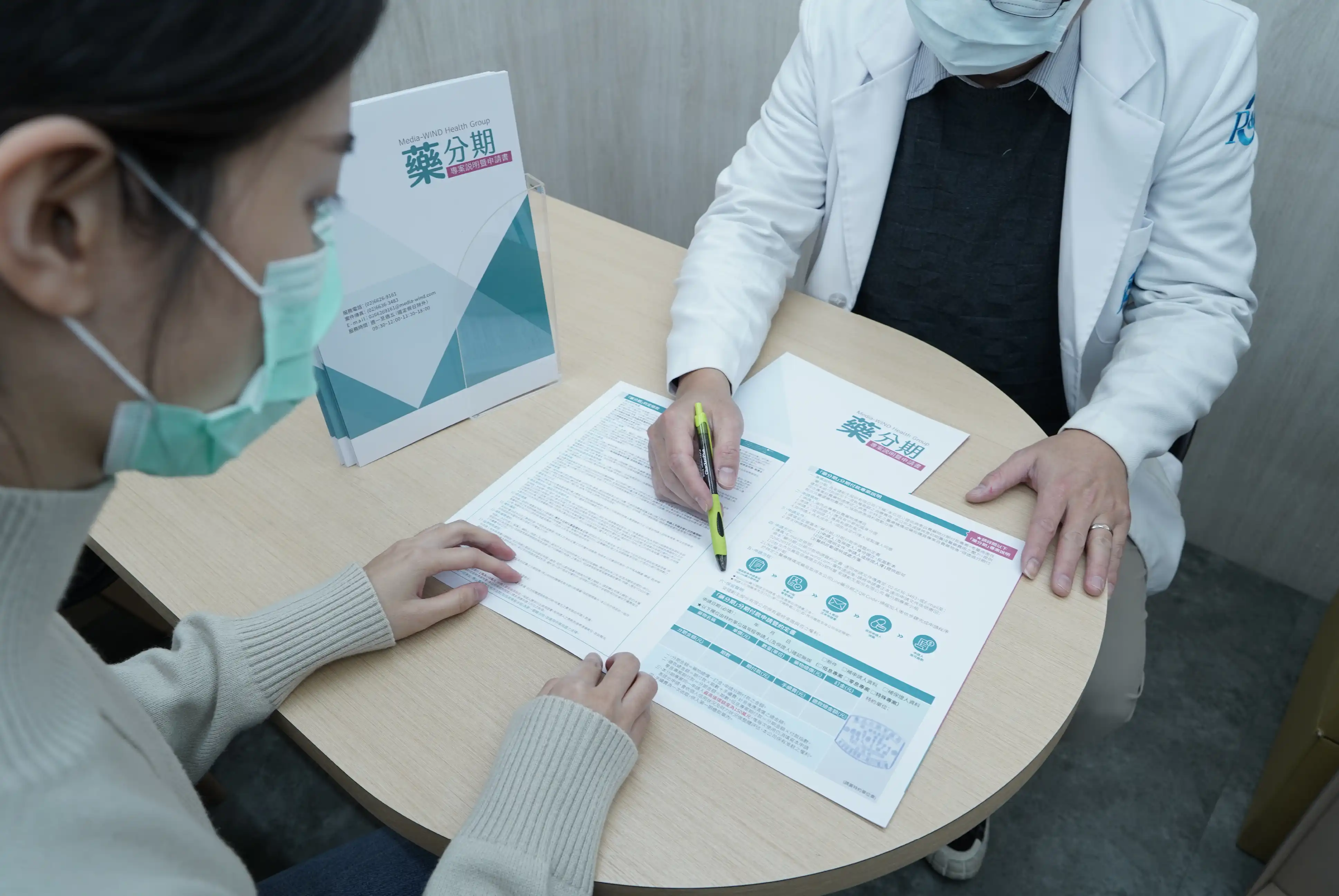
Chang Hsiang-hsin, General Manager of Media-WIND Health Group and CareCompanion Life, explains that public medical reimbursement can never keep pace with the development of new drugs on the market. Physicians can offer patients the most comprehensive treatment options, but when patients cannot afford self-funded drugs, they are left to pay for them as best they can through traditional finance or personal loans. Grounded in the philosophy of patient support, the company launched financial installment plans and a Drug Installment project, and continues to work with pharmacy partners to expand the business.
"The financial toxicity of self-funded cancer drugs is an issue of growing global medical concern in recent years, and it is also the thorniest problem where ethics and commerce collide." General Manager Chang Hsiang-hsin shared: "Developing a single new drug can cost tens of billions of dollars, and once a life-saving drug reaches the market it is hard to lower the price immediately. For example, self-funded new cancer drugs can cost NT$1–3 million a year in drug expenses." Without commercial insurance to share the cost, even a middle-class household with an annual income of a million dollars would face the financial burden of the treatment period, and the resulting stress on daily life and mental health is what is known as financial toxicity; past research has shown that the younger the patient, the higher the financial toxicity.
Market interest rates on installment payments are mostly very high, and medical debt is a common financial risk as well as an ethical and legal issue, making it very difficult for this market to develop. Because it obtained the support of the original manufacturer, CareCompanion Life—starting from the philosophy of patient support—pioneered the first installment payment plan for early-stage lung cancer oral targeted drugs, available through contracted pharmacies with a physician's prescription, in the hope of resolving the treatment financing difficulties some patients face. Clinical evidence shows that when early-stage lung cancer patients follow postoperative adjuvant therapy, the likelihood of disease recurrence can be effectively reduced.
Constrained by medical ethics and legal restrictions, Drug Installment does not encourage excessive medical consumption. General Manager Chang Hsiang-hsin explains that, unlike consumer finance, Drug Installment starts from adherence to professional medical decisions and also takes medical risk into account, assessing an evidence-based clinical model and, on the basis of the patient's affordability, extending the payment period—up to 10 fee-free installments—combining the widely adopted "buy-now-pay-later" inclusive finance concept to reduce the pressure of paying at once, while simplifying the application process to give patients more treatment options.
Media-WIND Health Group brings together its five internal business units to develop the PatientsForce patient support platform, offering the market more diverse medical solutions. General Manager Chang Hsiang-hsin notes that the essence of medicine is to treat disease, but physicians can only take responsibility for treating a patient's physical illness; falling ill also brings problems involving family, mental health, finances, work, and more, which also affect clinical treatment decisions. PatientsForce will continue to integrate innovative market resources to provide patient support services, strengthen access to medicine, and, alongside professional medical diagnosis, deliver better treatment quality for patients in Taiwan.

Patient data empowerment: benefits for those who download their personal health record
From name-based mask purchasing to quickly checking vaccination records, the NHI Express app has now been used by over 10 million people. Media-WIND Health Group has also kept pace with the development of smart healthcare, using the National Health Insurance Administration's My Health Bank connection feature and blockchain technology to develop MediCom (the MediCom APP), letting the public independently use their medical records to match themselves with suitable health benefits. Last year the company was also invited to attend the "NHIA My Health Bank SDK: Sharing New Health Service Applications" event. General Manager Chang Hsiang-hsin explains: "Patients have the right to independently apply their personal health data, which is a trend toward upgrading personal health services."

As the post-pandemic era arrives, digital health care is a global development trend. The vast majority of people have never possessed their own medical records, only going to the hospital to request their personal medical history when filing an insurance claim. The NHIA's My Health Bank can be considered a pioneering value-added service that realizes patient data empowerment, allowing patients to make value-added use of their NHI claim data, and during the pandemic assisting with information services such as vaccination, mask distribution, and test kit purchases. But when patients fall ill, they actually need more resources.
To address patients' pain points in obtaining resources, PatientsForce integrated its past resources with international pharmaceutical companies and the clinical frontline to develop the MediCom APP, which authorizes personal health data via blockchain, and obtained the Mobile Application Security Alliance's app security label. Besides storing health data on personal phones in a de-identified manner, it uses an authorization platform to provide patient resource matching services. Chairman and Managing Director Chang Hsiang-hsin noted that MediCom officially went live in February; the public can go to the official website https://medicom.patientsforce.com.tw/ to download and use the app, which actively matches patients with all kinds of useful support resources—for example, helping patients obtain cancer nutrition products, equipment, and other support programs—in the hope that, through this form of personal data empowerment, patients can complete their treatment and receive better care.