

Drugs approved for special-case manufacture or import join the relief system: what the Drug Injury Relief Act amendment means for the physician-patient relationship
AI-translated from the Chinese original · editorially reviewed
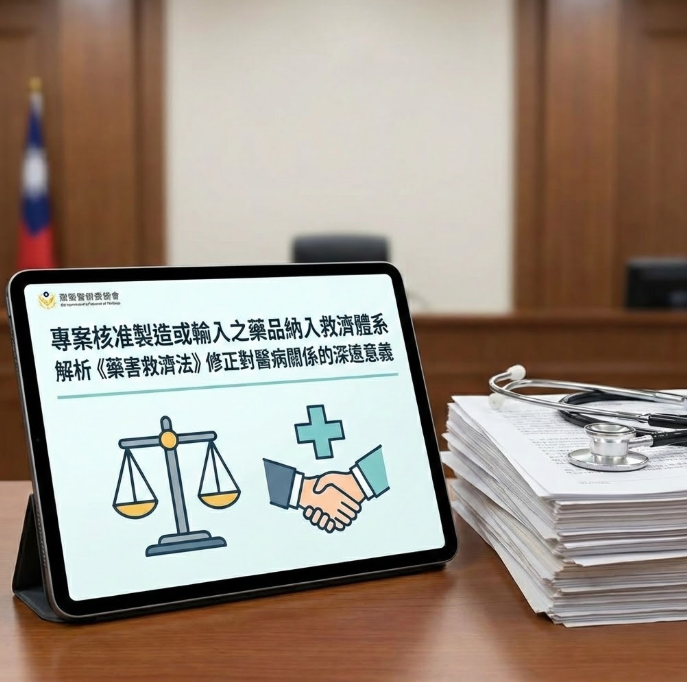
In modern medicine, drug therapy is a double-edged sword — efficacy often comes hand in hand with risk. On January 30, 2024, the Legislative Yuan passed the third reading of amendments to Articles 3 and 28 of the Drug Injury Relief Act, formally bringing drugs approved for special-case manufacture or import into the relief system. This legislative advance not only closes a gap in the social safety net, but rebuilds a bridge of trust and security between physicians and patients on the clinical front line.
Author: Patty Feng, Director of the Compliance Center, PatientsForce
Removing the "moral shackles" from clinical decisions
For years, whenever domestic drug shortages arose, or special-case drugs without a domestic license were brought in for rare diseases or urgent medical needs, physicians, patients and pharmacists were left in a regulatory vacuum with no legal protection.
Freeing physicians to exercise professional judgment: In the past, when recommending a special-case drug, physicians had to weigh not only the clinical evidence (EBM) but also the psychological burden and legal risk that "if a serious adverse reaction occurs, the patient will have nowhere to turn." With the amendment, the system now formally backs medical decision-making, allowing physicians to return purely to their professional judgment rather than resorting to defensive medicine out of fear of an institutional gap.
Upholding patients' equal right to life: For patients, life carries the same weight whether they are using a conventional drug or a life-saving special-case drug. The amendment eliminates the relief discrimination created by a drug's "status," ensuring that every trial participant or user who suffers an unforeseeable drug injury can receive financial compensation and medical support from the state.
From "litigation adversaries" to a "community of shared risk"
Ruptures in the physician-patient relationship often stem from murky questions of liability and crushing financial pressure after harm occurs. Drug injury relief is, in essence, a no-fault social insurance concept, and the buffering effect of this amendment is critical:
- Reducing incentives for conflict: Prompt relief payments ease the affected family's immediate hardship, effectively lowering the motivation to turn a tragedy into a medical lawsuit.
- Transforming roles: The physician shifts from potential "defendant" to "professional partner helping the patient apply for relief." By assisting with clinical data collection and adverse reaction reporting, healthcare providers and patients can stand on the same side, jointly confronting the challenges posed by drug uncertainty.
Strengthening the national drug safety surveillance network
From a pharmacovigilance perspective, bringing special-case imported drugs into the relief system creates a virtuous cycle for data collection:
- More proactive reporting: In the past, with no relief incentive, adverse reactions to special-case drugs may have gone unreported. Now, as relief entitlements take effect, clinical reporting will become more precise.
- Building a local database: This data will become a key benchmark for Taiwan's assessment of the safety of special-case drugs, forming a defense system of "early warning, timely relief, optimized medication use."
The amendment to the Drug Injury Relief Act is more than a cold change to legal text — it is a profound show of respect for the essence of medicine. Only when the legal system can reliably absorb the uncertainties inherent in medical care will physicians dare to push the boundaries of treatment and patients dare to entrust their lives. Completing this safety net marks a pivotal step for Taiwan's healthcare environment toward greater civility and resilience.