

The hidden cost of the trade war: how high tariffs could affect patient assistance programs
AI-translated from the Chinese original · editorially reviewed
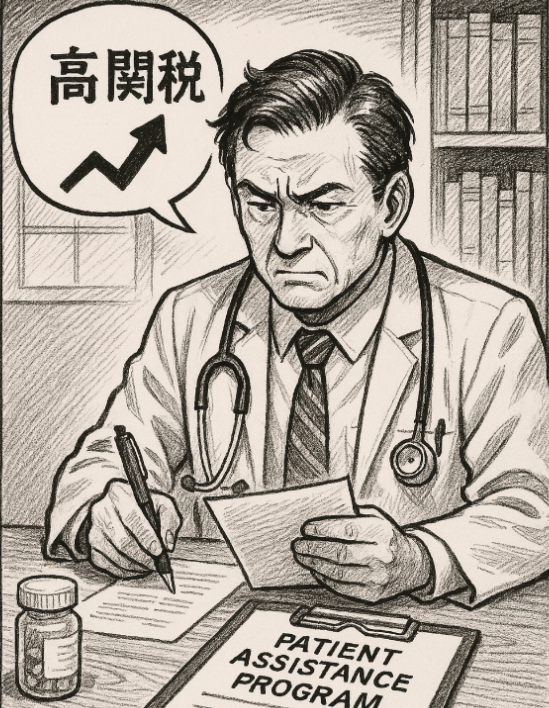
President Trump's healthcare policies — cutting Medicaid and ACA subsidies — could leave more Americans uninsured, while high-tariff policies drive up healthcare costs and in turn increase demand for PAPs (Patient Assistance Programs). PAPs are designed to help patients afford their medications, particularly low- and middle-income families.
Tariffs are ultimately paid by consumers
Since February, the Trump administration has imposed an additional 25% tariff on drug ingredients, medical devices, and manufacturing equipment from China and other countries. These tariffs, intended to reshore manufacturing and address trade imbalances, have at the same time shaken the entire healthcare supply chain.
According to the U.S. International Trade Commission, more than 80% of the active pharmaceutical ingredients (APIs) used in American drugs are manufactured abroad, with China and India as the main suppliers. The new tariff rates have already had an immediate impact on the cost structure of drugs that depend on these supply chains. When pharmaceutical companies face higher manufacturing costs, those increases ultimately translate into higher market prices — and in the end they directly affect the supply costs and pricing at stake in patient support programs.
The mathematics of drug access
The market strategy behind patient assistance programs has always rested on delicate economics. Most PAPs operate on fixed annual budgets funded by pharmaceutical companies' free-drug donations, foundation grants, and other contributions. When drug costs rise, these programs face a mathematical dilemma: the same support budget inevitably covers fewer patients, or the amount of assistance per patient must shrink to keep serving the same number.
For a patient with rheumatoid arthritis (RA), these changes in cost-sharing are more than statistics. As one RA patient put it: "Without assistance, my medication costs more than my monthly mortgage. I've been told my PAP assistance may be reduced next quarter — that will inevitably change my financial life."
Adapting under future price pressure
Patient solution providers must now pioneer new approaches to navigate this challenging environment:
1. Strategic drug prescribing: prioritize drugs with more stable supply chains or less tariff exposure, to ensure a reliable long-term drug supply for support programs.
2. Transparent partnerships: forward-thinking patient solution providers should work with pharmaceutical manufacturers to establish longer-term patient support agreements that cushion the cost increases brought on by sudden tariffs.
3. Policy advocacy: pursue price controls on critical drugs and medical supplies for life-threatening and rare diseases, to balance affordability.
4. Technology solutions: help healthcare institutions offer a wider range of benefit options, including digital platforms that aggregate manufacturer discounts and multiple assistance programs, making information on drug access more transparent.
"Facing uncertain economic policy interventions, we must be more agile than ever — using AI for meaningful predictions of patient affordability and working more closely with drug suppliers to anticipate supply chain disruptions and price increases, so we can adjust our programs proactively rather than reactively."
The complicated healthcare calculus
Tariffs may well strengthen the competitiveness of the U.S. pharmaceutical industry, but short-term, unplanned adjustments endanger the long-term security of the drug supply chain. As one economist specializing in healthcare markets put it: "The timeline for expanding domestic manufacturing may extend far beyond the immediate term. Building a pharmaceutical manufacturing facility that meets U.S. FDA standards typically takes 3–5 years from planning to production. During the transition, people at home may continue to feel the everyday harm of price pressure."
For chronic disease management, where medication adherence is critical to preventing costly hospitalizations, interruptions in access to treatment could ultimately raise costs across the entire healthcare system — because the disease progression that follows treatment interruption may inflict even greater damage on health insurance spending.
Implications for Taiwan's healthcare drug supply
Trump's 32% tariff on Taiwanese exports, effective April 9, 2025 (postponed 90 days), does more than disrupt trade. It could slow Taiwan's economic growth — the government cut its GDP outlook in February 2025 — and an economic downturn could shrink government budget spending, further squeezing the disposable income families can devote to medical care. The impact could be even greater: on one hand, demand for patient support program subsidies for self-paid drugs may grow; on the other, families whose incomes fall sharply or whose livelihoods are hit by the economic storm may be forced to interrupt self-paid treatment.
Drug price increases driven by the U.S. economy could further weaken national drug procurement power or intensify competition for drug supply — as during COVID-19, when some drugs stopped being supplied to Taiwan and certain specialty medicines withdrew from the Taiwanese market.
Meeting the challenge
For patient solution providers and the people who depend on drug assistance programs, ever-shifting tariff policy still calls for a balanced approach. Letting market mechanisms self-correct — with innovative service models helping problems find their way out — is the only way a market can regulate itself. That includes protective measures during the transition for patients who lack the means to adapt in the short term, and taking part in the policy dialogue. Treating market-regulated patient support programs as part of the economic safety net, and aligning corporate interests with social responsibility as a shared goal, is the mechanism that keeps supply and demand functioning sustainably in a free-market economy.