

Smart Patient Leadership Academy convenes industry, government, and academia to discuss pairing NHI with commercial insurance for better access to new medicines
AI-translated from the Chinese original · editorially reviewed
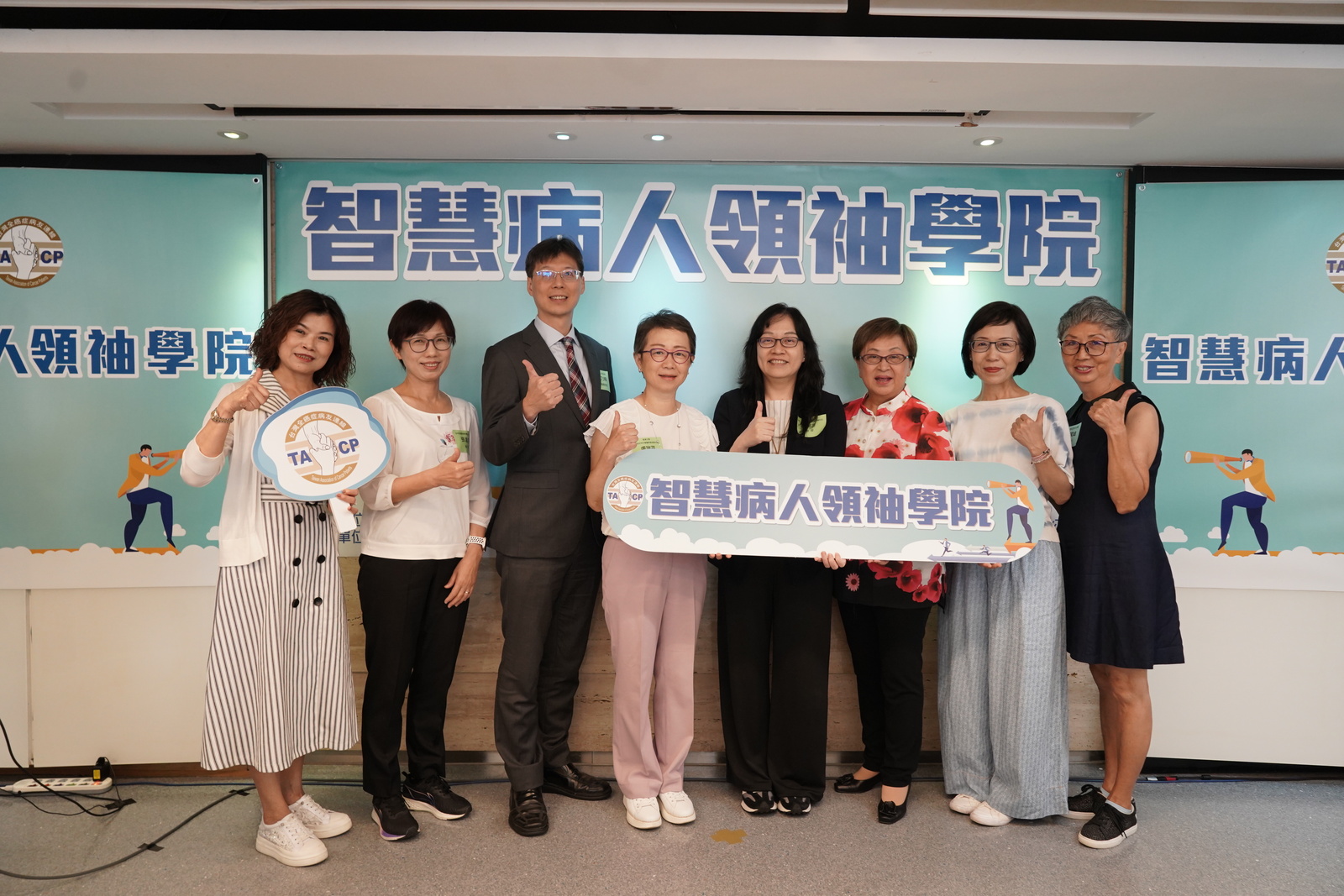
As medical technology advances, novel therapies, precision medicine, and new devices keep emerging, giving the public more choices — but also a heavy financial burden. On August 7, 2024, the Smart Patient Leadership Academy held a patient leader forum on "the feasibility of coordinating NHI with commercial insurance," inviting experts from the NHI, commercial insurance, academia, and industry to discuss and share views. The forum examined the current state of Taiwan's NHI and commercial insurance and analyzed arrangements in other countries, helping patient group opinion leaders better understand where healthcare policy is heading. PatientsForce Media-WIND Health Group (MWHG) also sponsored the execution of the forum.
Industry, government, and academia discuss "NHI coordinated with commercial insurance" — matching hospital data to design insurance products
In recent years, the National Health Insurance Administration (NHIA) and many scholars have begun exploring how NHI might work in concert with commercial insurance: the government would delineate coverage boundaries while insurers develop new policy products to fill the gaps left by NHI. At the same time, insurers could use data from the NHI platform to understand disease prevalence and gauge the future effectiveness of novel therapies, enabling products that better fit the market. Chang Wen-Wen, Division Director of the NHIA's Enrollment Division, added that the NHIA has already begun matching selected hospitals to provide data to insurers to support actuarial pricing of policies.
Professor Lu Jui-Fen of the Graduate Institute of Business and Management and Department of Health Care Management, College of Management, Chang Gung University, pointed out that such coordination is already operating in other countries. Canada offers complementary commercial health insurance that covers private hospital fees, outpatient drug costs, dental services, and more. In Taiwan, the National Health Research Institutes Forum is currently conducting the project "Strengthening Health Coverage — Exploring the Feasibility of Coordinating NHI with Commercial Insurance" (Professor Lu is one of its co-conveners), developing feasible proposals with a report expected early next year.
Yu Nai-Ying, Senior Vice President of the Product Department at Nan Shan Life, added that for cancer — the area drawing the most attention — "top-up" riders for novel cancer therapies have recently become popular, covering high-cost, cutting-edge treatments such as robotic-arm surgery, post-cancer genetic testing, and targeted therapy. On future feasibility, Professor Huang Hsiu-Ling, founder of Risk Management, Insurance & Finance magazine and its affiliated insurance education foundation, said bluntly: "Commercial insurance cannot dovetail seamlessly with NHI." Until formal policies are announced, top-up products, lump-sum-payout insurance, or home care insurance can serve as interim solutions.
Experts propose a "second-tier NHI" — using tiered deductibles to embody shared responsibility
Beyond what is feasible today, Professor Huang also proposed the concept of a "second-tier NHI," inspired by the compulsory automobile liability insurance launched in 1998 — universal coverage, no-fault, and fast payouts. She suggested borrowing the compulsory-insurance model to layer supplementary health coverage on top of the existing universal NHI. A second-tier NHI could also incorporate tiered deductibles, letting people choose contribution levels according to their financial means — putting the principle of partial self-responsibility into practice. Division Director Chang concluded that next year the government will fund a temporary dedicated budget for new cancer drugs. As the new policy takes effect, industry, government, and academia will continue in-depth discussions on how resources can be coordinated, how platforms can be integrated, and whether people with pre-existing or elevated health risks can be included in coverage — so that every person in Taiwan can access the best medical resources.
─ Amber Chang, PR Manager, Health Communications Division, PatientsForce Media-WIND