

Investing in employee well-being in the ESG era: PatientsForce's innovative employee support program
AI-translated from the Chinese original · editorially reviewed
Are employees losing focus at work because they worry about the health of aging parents at home?
Helping younger employees cope with family caregiving needs is an increasingly popular corporate benefit — and a key indicator of a company's duty of care to employees under ESG (environmental, social, and governance) sustainability.
Corporate attention to employee health — cardiovascular health in particular — is both a direct boost to employee welfare and an important investment in a company's long-term interests. According to World Health Organization data, cardiovascular disease is the world's leading cause of death, claiming about 17.9 million lives each year, or 31% of all deaths globally. Actively investing in employees' cardiovascular health can reduce sick leave and medical spending, lift morale, and improve overall productivity and corporate image.
PatientsForce Care Companion: a leading corporate cardiovascular health management program
Media-WIND Health Group (MWHG), a provider of innovative pharmaceutical benefit and Patient Support Program (PSP) management services, understands how vital cardiovascular prevention and management are to companies and individuals alike. It has combined digital health solutions into a corporate employee benefit option — especially for those who have undergone heart surgery or live with hypertension, high blood sugar, or high cholesterol (the "three highs"). Paired with a Garmin health smartwatch with ECG capability, a professional medical team reads users' ECGs, heart rate, and other key metrics as part of the employee support program — caring not only for employees themselves but extending to the health management of elders in their families.
According to research from the American Heart Association, regular monitoring of cardiovascular health data can significantly reduce the incidence of heart disease. A professional medical team remotely monitors the collected health data and builds personalized care plans around it. This provides real-time feedback and health alerts, and when a patient returns for a follow-up visit, it gives the attending physician valuable home-monitoring data — making treatment plans more precise and better adapted to individual differences.
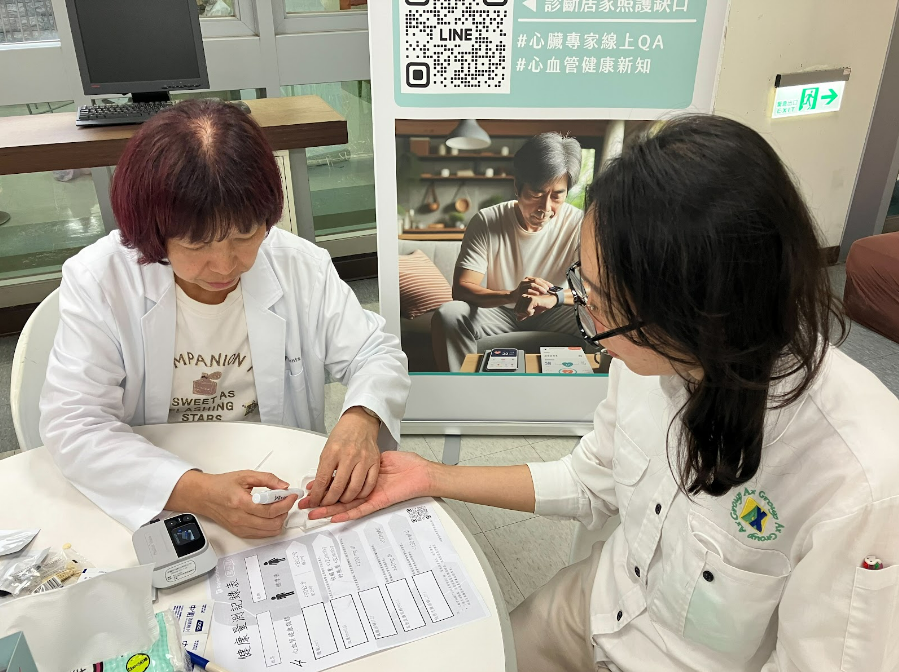
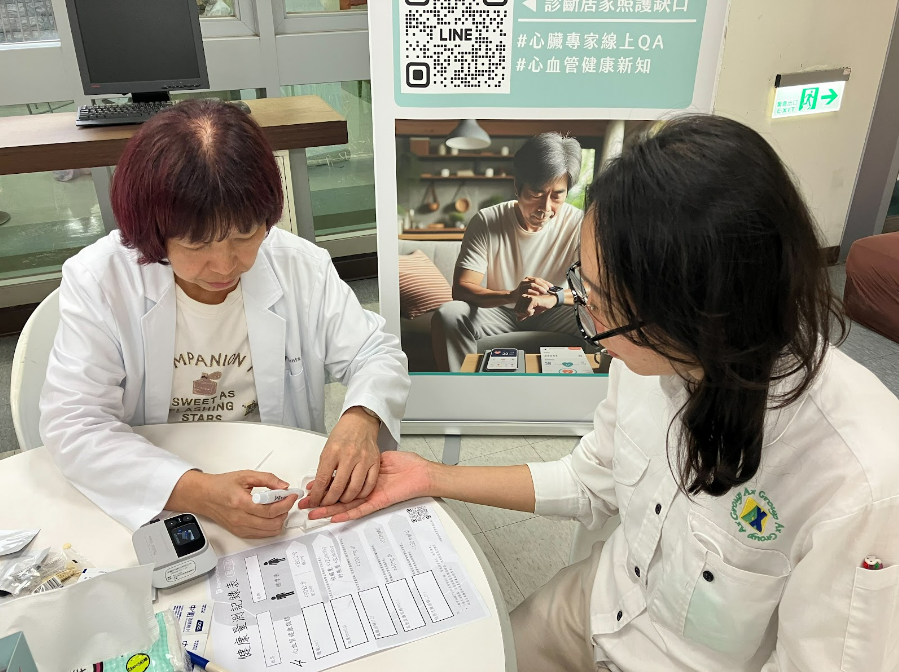
The Care Companion nursing team demonstrates blood lipid self-testing to employees at CTCI Group, while assessing disease risk through the NHIA's chronic disease risk assessment platform.
Photo credit: PatientsForce
CTCI Group builds a happier workplace: an employee health support program in practice
The PatientsForce Care Companion team partnered with CTCI Group to hold an in-house cardiovascular care health seminar on April 18, 2024, featuring Dr. Liu Cheng-Chieh, a family medicine physician from Taipei Veterans General Hospital Hsinchu Branch, as the employee health expert. Dr. Liu shared the latest advances in cardiovascular clinical research, discussed how everyday health management habits can reduce cardiovascular risk, and urged employees to seek care early at the first warning signs.
In addition, the PixoTest multi-function testing system provided by iXensor offered employees on-site health self-checks: in just three minutes, employees could see their complete lipid profile across four values — total cholesterol, triglycerides, HDL, and LDL. Combined with the NHIA's chronic disease risk assessment platform, employees could further evaluate and manage their cardiovascular disease risk.
Through collaborations and technology like this, PatientsForce Care Companion works with more health management experts and companies to bring frontline care resources to the workplace. With a family-physician-style model of health management and referral, employee support programs can become part of an integrated ecosystem for total health.
Sean Chang, General Manager, PatientsForce Media-WIND Health Group (MWHG)